Trusted by teams at






“We build Gitoro on Gitoro every day, so we feel the rough edges before you do. And I read every support ticket myself.”
Steffen Rudkjøbing, founder, Copenhagen
- Redundant across two datacenters
- Danish company, EU-only
- A live copy on GitHub, if you like
Not American. Not Microsoft.
GitHub is part of Microsoft, and the US CLOUD Act reaches data held by US companies wherever it is stored. We are a Danish company, and your code, pipelines and AI stay in the EU.
Outside the CLOUD Act
Danish company, EU-only hosting on every plan.
European AI
AI features run on models hosted in Europe.
People you can reach
Your feedback goes straight to the people who build Gitoro.
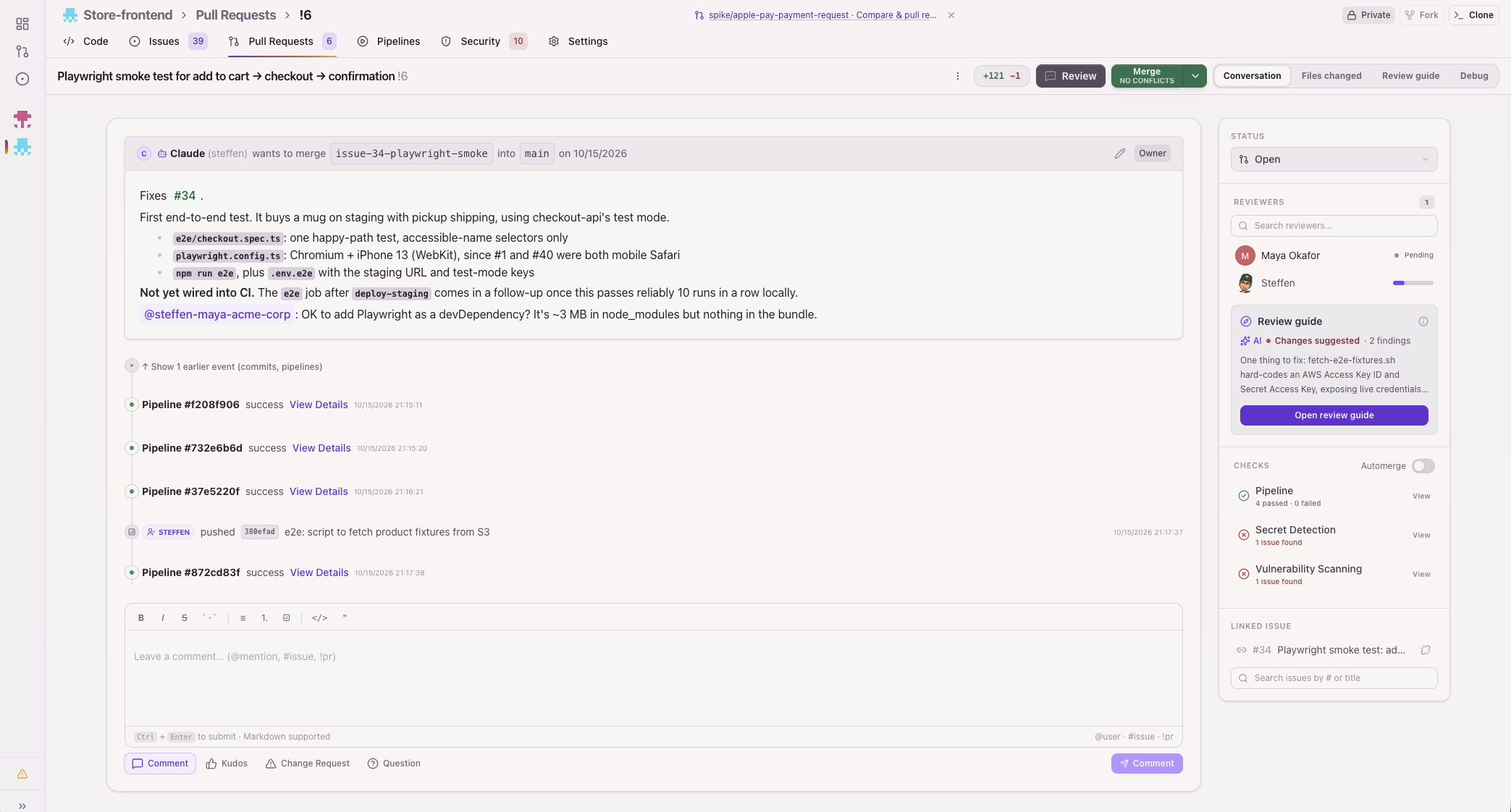
Approve pull requests you actually understand.
Most AI review tools review the pull request for you. Ours walks you through it change by change, in the order it makes sense, with findings you can argue with and a plain verdict. We run it on our own work: nearly every pull request we merge gets one.
Everything you use GitHub for.
Repositories, issues, code review, CI/CD, security and AI in one platform. We host all of it in Europe.
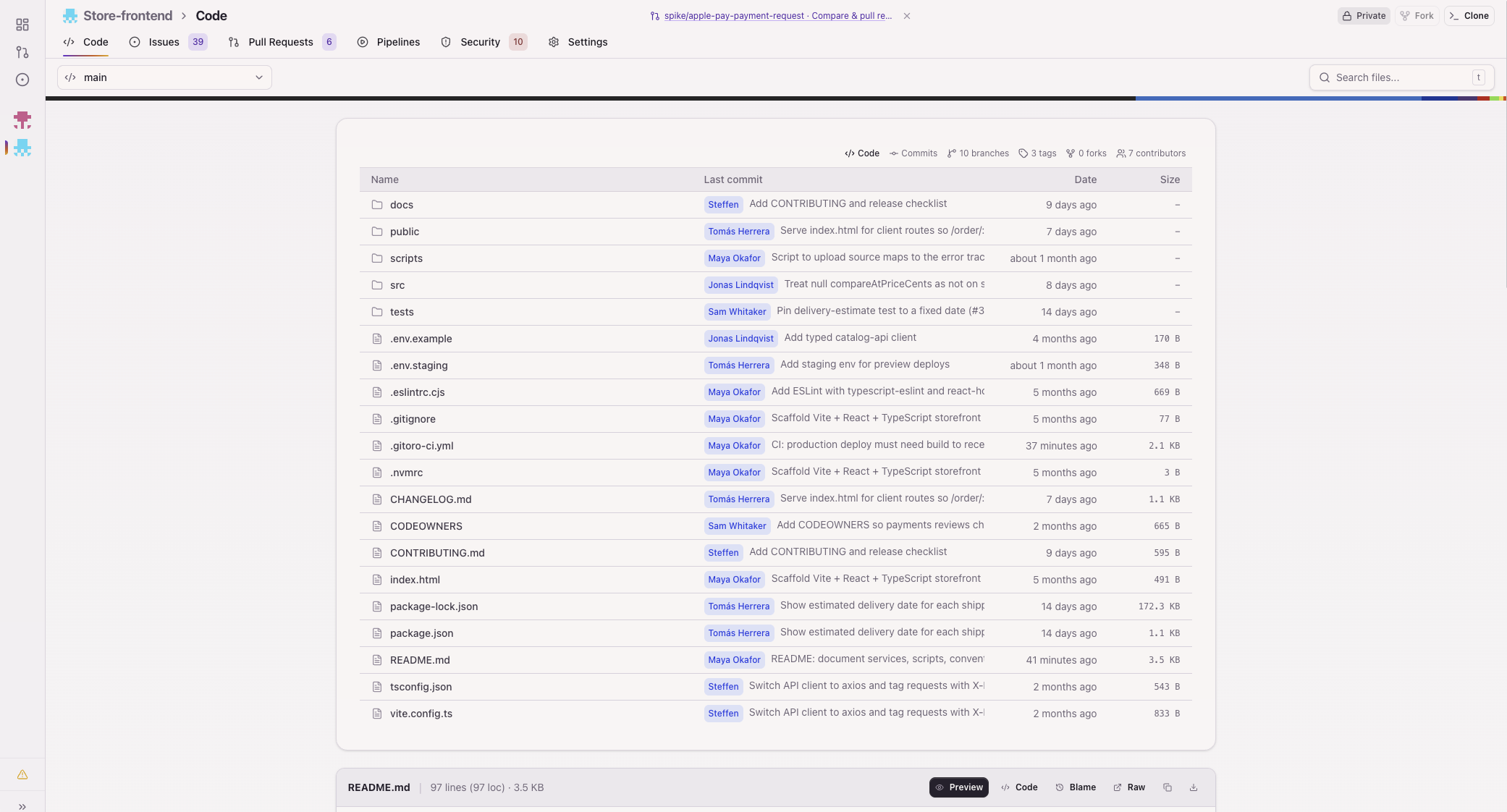
Git hosting for all your repositories.
Browse files and history, manage branches and tags, protect your default branch, and fork or spin up a new repository from a template in seconds.
Git hosting guide →Why Boeni Industries moved from GitHub
“We moved from GitHub as part of a broader effort to build a more sovereign European technology stack, and Gitoro has proven to be an excellent choice.
As a small company building serious technology, we value being treated as a partner rather than an anonymous support ticket.”

Michael Böni
Boeni Industries
# Works the same from GitHub or GitLab
# Mirror your repository, history included
$ git clone --mirror git@github.com:acme/api.git
$ cd api.git
$ git push --mirror git@gitoro.com:acme/api.git
Leave GitHub without losing anything
Push your code with Git, then point an MCP-connected agent at the migrate-to-gitoro prompt. It inventories the source repository first, shows you what can and can't be carried over, then migrates issues, pull requests and CI without you writing a script.
stages: [build, test, deploy]

test:
  stage: test
  image: node:20
  script:
    - npm ci
    - npm test
  rules:
    - if: '$CI_PIPELINE_SOURCE == "merge_request_event"'

deploy:
  stage: deploy
  needs: [test]
  environment: production
  when: manual
  script:
- ./deploy.sh $ENVIRONMENTPipelines you already know how to write
Pipelines use GitLab-CI syntax in a .gitoro-ci.yml, so your stages, rules and jobs carry over. Every push builds, tests and deploys on our runners in the EU or on your own, with live logs and manual approval gates.
Connected to Gitoro as Claude (service account)
> let's have a look at the backlog
⏺ list_issues(status: "open")
└ 8 open issues, sorted by priority
#512 looks highest priority - a pagination bug reported twice. Want me to start there?
> let's work on #512
⏺ assign_issue(number: 512)
└ Assigned to Claude
⏺ create_pull_request(draft: true)
└ Opened draft PR #618 → Fixes #512
Branched, opened a draft PR linked to the issue, and starting implementation now.
> I think this one's ready
⏺ mark_pr_ready(number: 618)
└ Marked ready for review
⏺ add_pr_comment(number: 618)
└ Summary comment posted
It's ready for review - what happens next is governed by your branch rules, not my call.
Your AI agents work here too, under the same rules as people
Connect Claude Code, Cursor or any MCP client with a scoped token. Your agent triages issues, opens draft pull requests and hands off for review, with the same permissions as a person, and you can revoke it anytime.
Skill repositories hold your team's agent skills. Each is a Git repository: changes to a skill are reviewed in pull requests, everyone who can read the repository gets its skills, and they work in Claude, ChatGPT, Gemini, Claude Code or any MCP agent. On every plan.